Encyclopedia of Synchronicity
Frequency Illusion: The Baader-Meinhof Effect Explained
The frequency illusion makes things you just noticed seem everywhere. See how selective attention and confirmation bias shape repeated-number experiences.
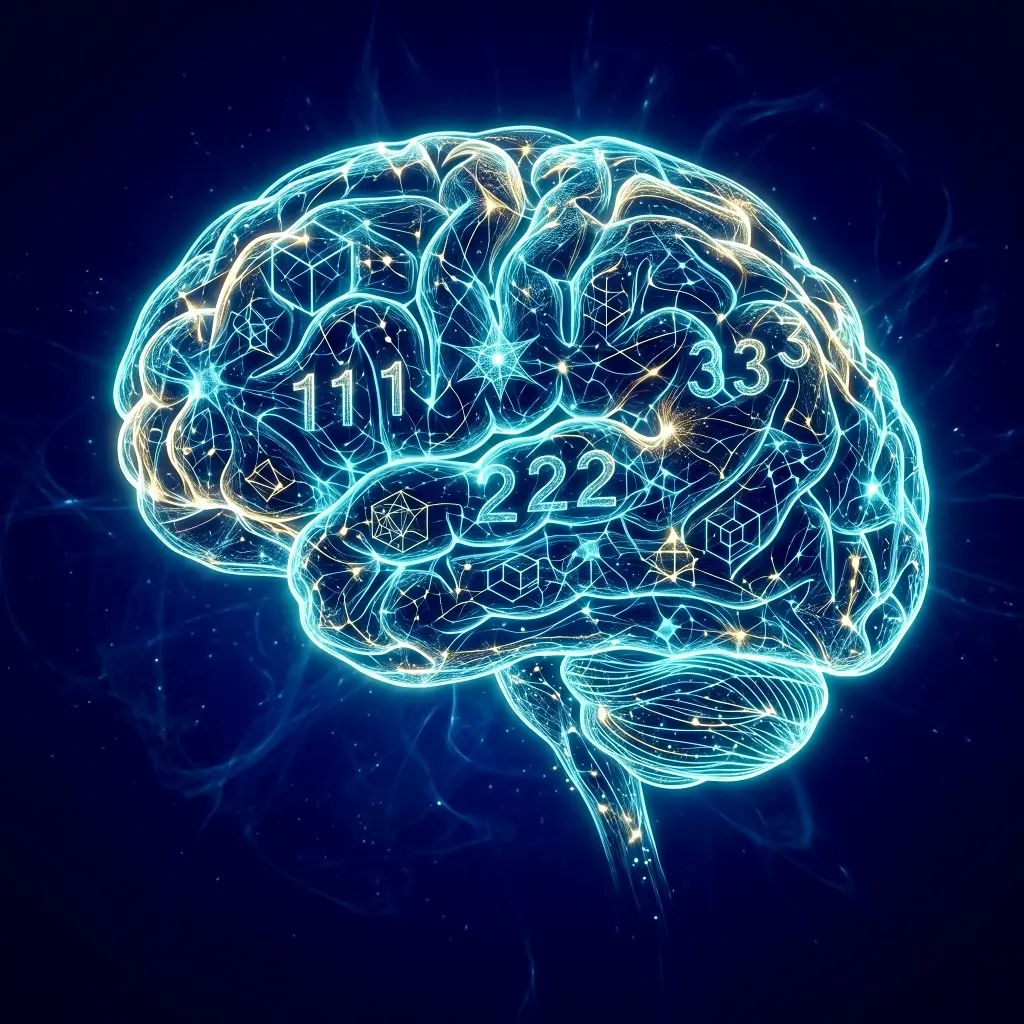
Frequency Illusion: The Baader-Meinhof Phenomenon Explained
Short answer: The frequency illusion, also called the Baader-Meinhof phenomenon, is a cognitive bias: after you notice something once, your brain starts spotting it everywhere. The thing did not become more common; your attention changed. With angel numbers like 11:11, selective attention highlights the pattern and confirmation bias keeps the matches you remember. The feeling is real, but it does not prove an external message.
If you keep seeing 11:11, 222, 333, a name, a symbol or the same pattern everywhere, it can feel like the world is trying to tell you something.
You notice it once.
Then again.
Then again.
At some point, the repetition starts to feel personal.
Psychology has a name for this experience: the frequency illusion, also known as the Baader-Meinhof phenomenon. It happens when something you recently noticed suddenly seems to appear much more often.
The important point is simple:
the world may not have changed — your attention has.
Interpretive content: this guide explains the frequency illusion, repeated-number experiences and related cognitive biases. It is not a substitute for medical, psychological, legal or financial advice.
Quick answer: what is the frequency illusion?
The frequency illusion is a cognitive bias where something you recently learned, noticed or emotionally connected with suddenly seems to appear everywhere.
It can involve:
- a word;
- a name;
- a car model;
- a song;
- a symbol;
- a repeated number;
- a mirror hour like 11:11;
- an angel number like 111, 222 or 333.
In most cases, the thing itself has not suddenly become more frequent. Instead, your brain has started noticing and remembering it more.
A simple way to say it:
the frequency illusion is not usually an increase in reality. It is an increase in awareness.
What you will learn in this guide
- What the frequency illusion means.
- Why it is also called the Baader-Meinhof phenomenon.
- Why you keep seeing the same number everywhere.
- How it connects with angel numbers and mirror hours.
- How selective attention and confirmation bias work together.
- Why repeated patterns can feel personal or spiritual.
- When this bias can be useful.
- When it can lead to overinterpretation.
- How to use recurring patterns in a grounded way.
Why the frequency illusion feels so convincing
The frequency illusion feels powerful because it creates a loop between attention and memory.
The process often looks like this:
- You notice something.
- Your brain marks it as relevant.
- You start detecting it more easily.
- Each new appearance feels meaningful.
- You remember the appearances that fit the pattern.
- The pattern starts to feel stronger than it really is.
This is why the experience can feel so real.
You are not imagining that you noticed the number, word or symbol. You really did notice it. But your interpretation of how often it appears may be shaped by attention and memory.
That is especially true when the pattern appears during an emotional moment.
If you see 11:11 while thinking about someone, or 222 during a difficult decision, the timing can feel meaningful. Your brain is more likely to remember it because emotion strengthens memory.
Frequency illusion and angel numbers
Angel numbers are repeated number sequences that many people interpret as symbolic or spiritual signs: 111, 222, 333, 444, 1111 or mirror hours like 11:11 and 22:22.
The frequency illusion can make angel numbers feel especially intense.
For example:
- you search for the meaning of 111;
- you start seeing 111 on receipts, screens or order numbers;
- each new appearance feels like confirmation;
- you begin to feel the number is following you.
From a psychological perspective, this does not necessarily mean 111 is appearing more often. It may mean your attention is now tuned to detect it.
That does not make the experience useless.
It simply means the meaning may be partly built by your mind.
A balanced interpretation would be:
angel numbers can feel meaningful without needing to be treated as proof, prediction or instruction.
If you want a broader explanation of how the brain turns repeated numbers into signs, you can read the guide on apophenia and angel numbers.
Why you keep seeing the same number everywhere
If you keep seeing the same number everywhere, several processes may be working together.
1. Selective attention
Selective attention is your brain’s ability to filter information and focus on what seems relevant.
You are surrounded by numbers all day:
- clocks;
- prices;
- receipts;
- addresses;
- license plates;
- phone numbers;
- notifications;
- order codes;
- statistics;
- dates.
Most of them disappear from awareness almost instantly.
But when a number becomes meaningful, your brain gives it priority. It starts standing out from the background.
Before, you may have seen it without noticing. Now, it feels like it is everywhere.
2. Frequency illusion
Once your attention is tuned to a number, the frequency illusion begins.
You notice it once, then again, then again. The repetition feels surprising because you were not tracking it before.
This creates the impression that the number has suddenly increased in your life.
But often, what changed is not the number.
What changed is your sensitivity to it.
3. Confirmation bias
Confirmation bias reinforces the pattern.
You remember the moments that confirm the story:
- “I saw 11:11 when I was thinking about them.”
- “I saw 222 right after asking for a sign.”
- “I saw 333 during a big decision.”
But you may forget the moments that do not fit:
- when you thought about someone and did not see 11:11;
- when you saw 11:11 and nothing emotional was happening;
- when you checked the time and it was completely ordinary;
- when other numbers appeared but had no meaning for you.
The mind is not trying to lie to you. It is trying to create order.
Why 11:11 feels so special
11:11 is one of the clearest examples of the frequency illusion in everyday life.
It is visually simple, symmetrical and easy to remember. Four identical digits on a digital clock stand out more than times like 10:47 or 13:28.
It also carries cultural meaning. Many people associate 11:11 with:
- making a wish;
- synchronicity;
- angel numbers;
- spiritual signs;
- thinking about someone;
- alignment;
- new beginnings.
So when you see 11:11, your brain has two reasons to care:
- it is visually striking;
- it already has symbolic meaning attached to it.
That combination makes it memorable.
If you see 11:11 after thinking about someone or during a difficult period, the emotional context makes it even more powerful.
This does not prove that 11:11 was sent from outside you. But it can still reveal something useful about your attention, emotions and need for meaning.
If your question is specifically about the symbolic side of this mirror hour, you can read the full guide on the meaning of 11:11.
Baader-Meinhof phenomenon: why the name sounds strange
The frequency illusion is often called the Baader-Meinhof phenomenon.
The name became popular after people described learning about something and then suddenly encountering it again soon after. Over time, the label became attached to the broader cognitive experience of “now I see it everywhere.”
The scientific idea is less about the name and more about the mechanism:
recent awareness changes what your brain notices.
That is why the same effect can happen with almost anything:
- a new word;
- a topic you just studied;
- a brand;
- a person’s name;
- a health symptom;
- a repeated number;
- a spiritual symbol;
- a place you are considering moving to.
Once something becomes relevant, your mind begins to scan for it.
Is it synchronicity or a cognitive bias?
Many people interpret repeated patterns through the idea of synchronicity, a concept associated with Carl Jung.
Synchronicity refers to coincidences that feel meaningful even when there is no obvious causal connection.
For example:
- you think about a person and they message you;
- you keep seeing a number during a life transition;
- a symbol appears at the exact moment you were reflecting on it.
A psychological explanation and a symbolic interpretation do not have to cancel each other out.
You can say:
“My brain may be noticing this pattern because of selective attention.”
And also:
“This pattern feels meaningful because of what I am living right now.”
The key is not to turn a meaningful coincidence into an absolute command.
A grounded interpretation would be:
“This pattern caught my attention. What was I thinking, feeling or avoiding when I noticed it?”
That question gives you information without making the pattern control your choices.
When the frequency illusion can be useful
The frequency illusion is not always a problem. It can be useful when you understand it.
It can support learning
When you learn a new concept, you begin to recognize it in real life. That helps memory and understanding.
For example, once you learn about confirmation bias, you may start noticing it in conversations, news headlines or your own decisions.
It can reveal your focus
The patterns you notice often say something about what your attention is already tuned toward.
If you notice opportunities, ideas or solutions more often, it may be because your mind is actively scanning for them.
If you notice threats, rejection or negative signs more often, it may be because anxiety has tuned your attention in that direction.
This does not mean thoughts magically create reality.
It means attention shapes what becomes visible.
It can become a reflection prompt
When you notice a repeated number, you can use it as a check-in:
- What was I thinking?
- What was I feeling?
- What do I need right now?
- Am I looking for reassurance?
- What concrete action would help?
This turns the frequency illusion into a mindfulness cue rather than a source of confusion.
When it can mislead you
The frequency illusion can become misleading when you treat repeated attention as external proof.
It can lead you to believe:
- something is more common than it really is;
- a person is connected to you because a number appeared;
- a decision is confirmed by a sign;
- a fear is true because you keep noticing evidence for it;
- a relationship is destined because patterns seem to align;
- a belief is correct because examples keep appearing.
This can be especially risky when emotion is high.
During anxiety, heartbreak, grief or uncertainty, the mind may search for signs more intensely. The more you search, the more signs you seem to find.
That can create a loop:
- you feel uncertain;
- you look for a sign;
- you notice a pattern;
- you feel temporary relief;
- uncertainty returns;
- you need another sign.
If this happens, the pattern is no longer helping you reflect.
It is feeding dependence.
How to use repeated patterns without overinterpreting them
When a pattern stands out, you do not have to dismiss it or obey it.
You can work with it in a grounded way.
Try this process:
- Pause. Do not immediately search for the meaning.
- Notice the context. Where were you? What were you thinking?
- Name the emotion. Hope, fear, anxiety, excitement, sadness, calm?
- Check the facts. What do you actually know?
- Separate symbol from decision. A symbol can inspire you, but it should not decide for you.
- Choose one small action. Something real and proportionate.
- Let the pattern pass. You do not need to keep looking for confirmation.
A useful phrase is:
“This caught my attention. I can learn from that without turning it into a command.”
Journaling exercise: test the pattern gently
If you keep seeing the same number or symbol, try tracking it for one or two weeks.
Not to prove or disprove it obsessively, but to understand your own attention.
Use a simple table:
| Question | Short answer |
|---|---|
| What pattern did I notice? | 11:11, 222, a name, a symbol… |
| Where did I notice it? | clock, receipt, phone, street… |
| What was I thinking? | person, decision, fear, desire… |
| What emotion was present? | anxiety, hope, calm, sadness… |
| What meaning did I give it? | sign, warning, confirmation… |
| What facts do I actually have? | concrete evidence |
| What small grounded action can I take? | wait, rest, speak, write… |
After several days, look for emotional patterns.
You may discover that the number appears most often when you are:
- anxious;
- thinking about someone;
- avoiding a decision;
- looking for reassurance;
- about to act impulsively;
- needing rest;
- trying to make sense of change.
That insight may be more useful than a fixed interpretation.
Frequency illusion vs apophenia
The frequency illusion and apophenia are related, but they are not identical.
| Concept | What it means | Example |
|---|---|---|
| Frequency illusion | something seems more common after you notice it | you learn about 222 and start seeing it everywhere |
| Apophenia | the mind finds meaningful patterns in ambiguous or random data | you interpret repeated 222 as a message |
| Confirmation bias | you remember what supports your belief | you remember only the times 222 appeared during emotional moments |
| Synchronicity | a coincidence feels personally meaningful | 222 appears during a decision and feels symbolic |
A simple distinction:
frequency illusion explains why you notice it more.
apophenia explains why it starts to feel meaningful.
Both can be involved when people experience angel numbers.
Frequency illusion in love and relationships
The frequency illusion can become especially strong in love.
When someone occupies your mind, you may start noticing things connected to them:
- their name;
- their birthday;
- songs you shared;
- places linked to them;
- repeated numbers you associate with them;
- 11:11 when thinking about them.
This can feel like confirmation that the connection is special or that the other person is thinking about you.
But repeated patterns do not replace real-world evidence.
In relationships, it helps to ask:
- Is there actual reciprocity?
- Does this person act consistently?
- Am I using signs to avoid uncertainty?
- Do I feel calm or trapped in waiting?
- What conversation, boundary or closure do I need?
A sign can help you reflect.
It cannot confirm another person’s feelings.
Frequently asked questions about the frequency illusion
What is the frequency illusion?
The frequency illusion is a cognitive bias where something you recently noticed suddenly seems to appear much more often. The actual frequency usually has not changed; your attention and memory have become more tuned to it.
Is the frequency illusion the same as the Baader-Meinhof phenomenon?
Yes. The frequency illusion is often called the Baader-Meinhof phenomenon. Both describe the experience of suddenly noticing something everywhere after it first becomes meaningful or familiar.
Why do I keep seeing the same number everywhere?
Once a number becomes emotionally or symbolically relevant, your brain may start detecting it more through selective attention. Confirmation bias then makes you remember the appearances that fit the pattern and forget the ordinary moments that do not.
Why do I keep seeing 11:11?
11:11 is visually memorable and culturally associated with signs, wishes and synchronicity. Once you notice it and give it meaning, selective attention and the frequency illusion can make it feel as if it appears at especially important moments.
Is the frequency illusion real?
Yes, but it affects perception rather than reality. The change happens in awareness, not necessarily in the actual frequency of the thing you notice.
Why does the frequency illusion happen after noticing something once?
Because your brain flags new or meaningful information as relevant, then starts prioritizing it through selective attention. Memory then reinforces the pattern by keeping the moments that seem to confirm it.
Is the frequency illusion the same as confirmation bias?
Not exactly. Confirmation bias is part of the process, but the frequency illusion also involves selective attention before memory reinforces the pattern.
Does the frequency illusion mean something is actually increasing?
No. It usually means your perception has shifted, making something feel more frequent because you notice and remember it more.
Does the frequency illusion mean angel numbers are not meaningful?
Not necessarily. It means the feeling of repeated signs can have a psychological explanation. You can still use angel numbers as prompts for reflection, but they should not be treated as proof, predictions or commands.
Can you stop the frequency illusion?
Not completely. It is a normal cognitive process. But understanding it can reduce overinterpretation and help you stay grounded when patterns start to feel too intense.
When can the frequency illusion become a problem?
It can become a problem if it leads to anxiety, compulsive checking, rigid beliefs or important decisions based only on signs. If a pattern makes you feel controlled, it may be time to step back and return to concrete facts.
Next steps
If you keep seeing the same number, name or symbol everywhere, you do not need to panic or dismiss the experience. You can use it as a moment of awareness.
The frequency illusion explains why your attention keeps finding the pattern. Apophenia explains why the pattern may start feeling meaningful. Together, they show how powerfully the mind shapes experience.
To go deeper into meaning-making and repeated numbers, read the guide on apophenia and angel numbers. If your experience is connected to a specific mirror hour, you can explore the meaning of 11:11 or the meaning of 111.
Remember this: the frequency illusion does not mean your experience is fake. It means your attention is active. The useful question is not only “why is this everywhere?” but “why is my mind noticing this now?”
Sources and further reading
Related Articles
Are Angel Numbers Real or Apophenia? What Psychology Says
22:22 Psychology: Pattern Recognition, Attention and Why It Feels Significant
11:11 and Anxiety: Why Repeated Numbers Can Become Hard to Ignore
11:11 Psychology: Pattern Recognition, Attention and Why It Feels Significant
22:22 and Anxiety: Why Repeated Numbers Can Become Hard to Ignore
Frequently asked questions
What is the frequency illusion?
The frequency illusion is a cognitive bias where something you recently noticed suddenly seems to appear much more often. The actual frequency usually has not changed; your attention and memory have become more tuned to it.
Is the frequency illusion the same as the Baader-Meinhof phenomenon?
Yes. The frequency illusion is often called the Baader-Meinhof phenomenon. Both describe the experience of suddenly noticing something everywhere after it first becomes meaningful or familiar.
Why do I keep seeing the same number everywhere?
Once a number becomes emotionally or symbolically relevant, your brain may start detecting it more through selective attention. Confirmation bias then makes you remember the appearances that fit the pattern and forget the ordinary moments that do not.
Why do I keep seeing 11:11?
11:11 is visually memorable and culturally associated with signs, wishes and synchronicity. Once you notice it and give it meaning, selective attention and the frequency illusion can make it feel as if it appears at especially important moments.
Is the frequency illusion real?
Yes, but it affects perception rather than reality. The change happens in awareness, not necessarily in the actual frequency of the thing you notice.
Is the frequency illusion the same as confirmation bias?
Not exactly. Confirmation bias is part of the process, but the frequency illusion also involves selective attention before memory reinforces the pattern.
Does the frequency illusion mean angel numbers are not meaningful?
Not necessarily. It means the feeling of repeated signs can have a psychological explanation. You can still use angel numbers as prompts for reflection, but they should not be treated as proof, predictions or commands.
Can you stop the frequency illusion?
Not completely. It is a normal cognitive process. But understanding it can reduce overinterpretation and help you stay grounded when patterns start to feel too intense.